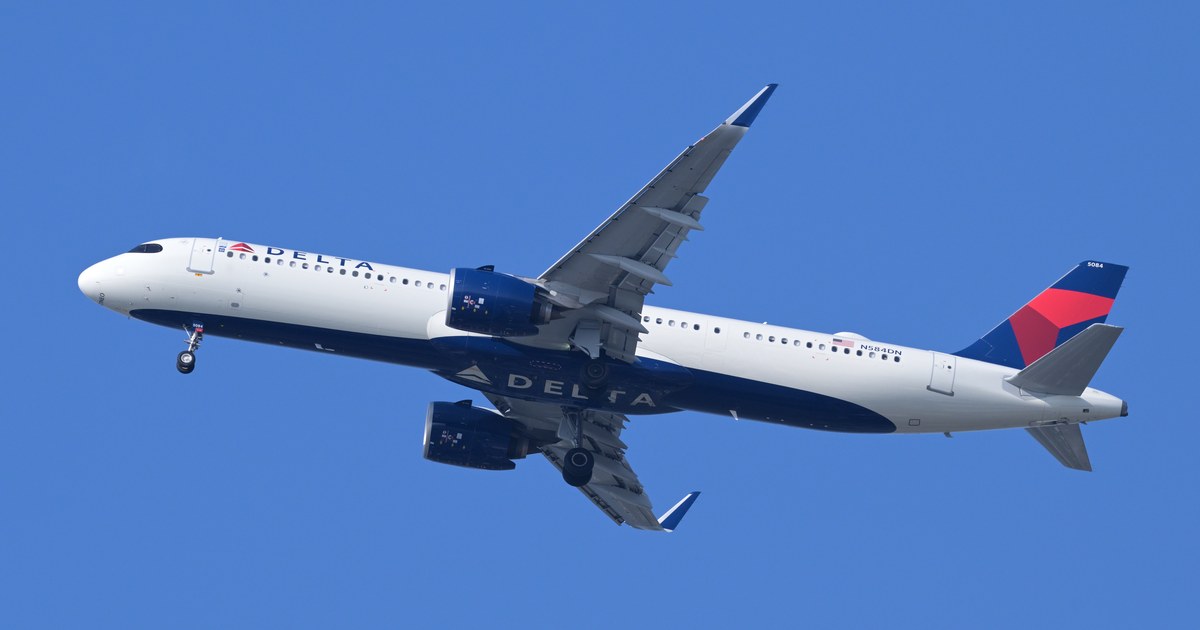
Delta Air Lines reports Q2 2026 results Friday, July 10, before the market opens, and the options market is already pricing a mid-single-digit move that has nothing to do with whether Delta beats the headline EPS number. The real swing factor is premium-cabin demand and fuel-cost guidance, and that changes how a premium seller should size a trade around this print.
- Delta reports Q2 2026 before the open on Friday, July 10, 2026.
- Consensus estimates cluster around $1.43 to $1.48 EPS (sources diverge slightly) on roughly $17.72 billion in revenue, a 6.5% year-over-year revenue increase against an EPS decline of roughly 32% from $2.10 a year ago.
- Delta has beaten EPS estimates in each of the last four quarters.
- Airline earnings move on fuel-cost and unit-revenue (RASM) guidance more than on the headline beat or miss.
- This is a tight publish window: the pre-earnings expected-move setup only has value through the morning of July 10.
Why Delta’s Q2 Print Is Different From a Tech or Bank Earnings Report
Airlines run on razor-thin operating margins, so a report that beats on revenue can still disappoint the market if unit costs came in hot. Delta’s own Q2 setup is a good example of that dynamic already showing up in the numbers before the print: analysts expect revenue up about 6.5% year over year to roughly $17.72 billion, while EPS is expected to fall by roughly 32% from the $2.10 Delta posted in the same quarter last year. That combination, revenue growth alongside an earnings decline, is exactly the kind of report where the stock’s reaction depends on guidance language, not the scoreboard number.
Delta has cleared the consensus EPS bar in each of the last four quarters, which is worth knowing going in, but a beat streak does not tell you anything about the size of the move. It only tells you the market has recently been under-forecasting Delta’s execution, which can cut either way: a fifth straight beat might get a muted reaction if it is already assumed, while a beat paired with cautious guidance on fuel costs or fall-quarter demand could still send the stock lower.
What Actually Moves Delta Stock After Earnings
Three lines in the release matter more than the EPS headline:
1. Premium-cabin and loyalty mix
Delta has spent several years pushing revenue mix toward Comfort+, Delta One, and its SkyMiles co-brand card program, and that strategy has outperformed the basic-economy price war that has squeezed several other US carriers. Guidance on premium-cabin demand and loyalty revenue growth is the clearest read on whether that strategy is still working.
2. Unit revenue (RASM) and unit cost (CASM) trends
Revenue per available seat mile and cost per available seat mile are the two numbers that determine whether growth is profitable growth. A revenue beat with unit costs rising faster than unit revenue is a margin story the market will punish even on an EPS beat.
3. Fuel-cost guidance for the back half of the year
Jet fuel is the single largest controllable cost for any airline. Forward guidance on fuel assumptions for Q3 and Q4 tends to move the stock more than the quarter that just closed, because it is the market’s best forward-looking input on margin.
How to Read Delta’s Expected Move
The options market’s expected move for an earnings event is derived from the price of an at-the-money straddle expiring shortly after the report. If Delta is trading at, say, $52 and the nearest-expiration ATM straddle is priced around $2.60, the market is pricing roughly a 5% move in either direction by expiration. That expected move is smaller than what a mega-cap tech name typically prices in, but larger than what a slow-moving consumer staple would show, which fits Delta’s place as a high-beta, high-operating-leverage industrial name.
Compare that expected move against Delta’s own trailing history. Airlines as a group tend to have wider realized post-earnings moves than their implied move would suggest in quarters with a guidance surprise, and tighter-than-implied moves in quarters where the print lines up with expectations. That asymmetry is exactly why this is not a set-it-and-forget-it premium-selling candidate: the tail risk sits on the guidance commentary, not the reported quarter.
| Approach | What it expresses | Best fit |
|---|---|---|
| Long straddle or strangle | A bet the actual move will exceed the market’s expected move | Traders who think guidance will surprise sharply either way |
| Iron condor around the expected move | A bet the stock stays inside the market’s own pricing of the move | Premium sellers comfortable defining risk on both sides |
| Short strangle (undefined risk) | Same thesis as an iron condor, without the protective wings | Experienced sellers with margin for uncapped tail risk, not a fit for most retail accounts |
A hypothetical, illustrative example only: if Delta is trading near $52 into the print and the market is pricing a roughly 5% expected move, a trader testing an iron condor might place short strikes just outside that expected-move range, for instance in the neighborhood of $49.50 and $54.50, and buy further out-of-the-money protection to define risk on both sides. This is not a trade recommendation, and actual strikes should be sized to the real expected move and account risk tolerance on the day, not to numbers in an article written before the report.
Where This Fits in the Bigger Bank-and-Industrial Earnings Week
Delta reports four days before JPMorgan, Wells Fargo, Goldman Sachs, and Bank of America all report on July 14, so Delta effectively kicks off the broader Q2 2026 earnings season for options traders watching cyclical names. A weak Delta report on cost or demand guidance can color sentiment into the bank reports later that week, even though the two sectors are not directly linked, because both are read as barometers of consumer and corporate spending health.
For traders checking where to find the expected move itself before placing anything, most major platforms display it directly: tastytrade shows it as a cone overlay on the option chain, and thinkorswim has a dedicated Expected Move indicator on the trade page. Either works for pulling the number this article is built around, and neither is required, since the expected move can be calculated by hand from any option chain (roughly the ATM straddle price divided by the stock price).
Bottom Line
Delta’s Q2 2026 report matters less for the EPS beat or miss than for what management says about premium-cabin demand, unit costs, and forward fuel guidance. Size any options position to the market’s own expected move rather than a guess, and remember this is a same-week preview to the much larger July 14 bank earnings cluster.
FAQ
Q: When does Delta report Q2 2026 earnings?
A: Friday, July 10, 2026, before the market opens.
Q: What is Delta expected to report?
A: Consensus estimates cluster around $1.43 to $1.48 EPS on approximately $17.72 billion in revenue, though individual estimate providers vary slightly. Revenue is expected to rise about 6.5% year over year while EPS is expected to fall roughly 32% from the prior year’s $2.10.
Q: Why would Delta stock fall even if it beats EPS estimates?
A: Airlines run on thin margins, so unit-cost trends and forward fuel-cost guidance often matter more to the stock’s reaction than the headline EPS number. A beat paired with cautious cost or demand guidance can still send the stock lower.
Q: How is the options expected move calculated?
A: It is derived from the price of the at-the-money straddle expiring near the earnings date, roughly the straddle’s price divided by the stock price, which approximates the one standard deviation move the options market is pricing in.
Q: Is this article recommending a specific trade on Delta?
A: No. The strategies and strike examples above are illustrative only, meant to explain how expected-move-based positioning works, not as a recommendation to buy or sell any specific option or take a position in Delta stock.
Want to see how this same beat-but-still-falls dynamic has played out in other recent reports? Read The Beat-and-Fall Earnings Pattern for real examples, or check the Q1 2026 Delta earnings expected-move breakdown for how this same setup played out last quarter.