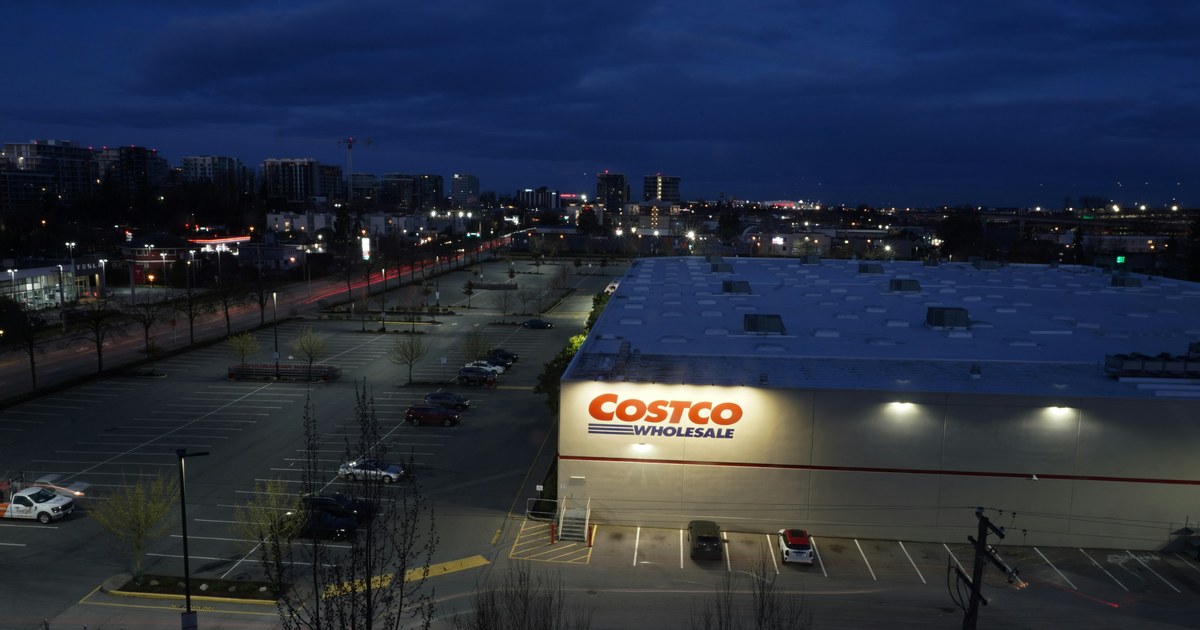
Costco beat on both lines when it reported fiscal Q4 2026 results Thursday, September 24, after the close: $6.75 EPS against a consensus of roughly $6.54, and $93.9 billion in net sales, up 11.2% year over year. The stock barely moved. Shares were already down slightly into the print and edged up only a fraction of a percent after hours, the same muted reaction pattern this piece expected going in, for largely the same reasons: a beat that included a one-time tariff-refund benefit and forward commentary on a slower comp-sales pace ahead were enough to offset an otherwise clean quarter.
Key Takeaways
- Costco reported fiscal Q4 2026 EPS of $6.75 (beat consensus ~$6.54) and net sales of $93.9 billion, up 11.2% year over year, confirmed via Costco’s own investor relations release.
- The EPS beat included a $0.15 per-share one-time benefit from IEEPA tariff refunds, a detail worth separating from the underlying operating beat.
- Membership renewal rates improved slightly: 92.3% U.S./Canada, 89.8% worldwide, both up about 10 basis points year over year.
- Digitally-enabled comparable sales grew 19.5% in the quarter, a deceleration from fiscal Q3’s 21.5% pace but still the company’s strongest growth category.
- The stock’s muted reaction (roughly flat) validates the pre-earnings thesis that Costco trades smaller post-earnings moves than most names covered on this site.
What Actually Moved (and Didn’t)
The headline numbers were a clean beat: fiscal Q4 net sales of $93.9 billion against a consensus band of $94.2 to $94.9 billion for total revenue (Costco’s total revenue figure, which includes membership fees, came in at $95.7 billion, ahead of estimates), and EPS of $6.75 against consensus near $6.54 to $6.55. For the full fiscal year, net sales reached $297.2 billion (up 10.1%) with diluted EPS of $20.76, up from $18.21 the prior year.
Despite the beat, shares were essentially flat around the print, consistent with the 2.6% to 3.4% historical realized-move range this piece flagged before the report. Two things kept the reaction muted: a $0.15 per-share slice of the EPS beat came from a one-time IEEPA tariff-refund benefit rather than core operating strength, and management’s forward commentary pointed to comparable-sales growth normalizing toward roughly a 6.7% pace, a deceleration from the double-digit growth investors have gotten used to. Costco’s valuation, trading near a 45x P/E heading into the print, left little room for anything short of an unambiguous beat-and-raise to move the stock meaningfully higher.
The Two Numbers That Mattered Most
As flagged pre-earnings, the renewal rate and digital comp figures moved more attention than the EPS line itself:
- Membership renewal rate. The U.S./Canada renewal rate came in at 92.3%, up from 92.2% the prior quarter. The worldwide rate reached 89.8%, also up about 10 basis points. Paid executive members grew 9.4% to 42.3 million, total paid members reached 84.1 million, and total cardholders hit 150.4 million. The renewal trend held steady rather than declining, removing one of the two risk factors this piece called out pre-earnings.
- Digitally-enabled comparable sales. Digital comps grew 19.5% for the quarter (19.8% on an adjusted, currency-neutral basis), with e-commerce and app traffic up roughly 30%. That is a deceleration from fiscal Q3’s 21.5% pace, the kind of “still strong but slowing” number that explains part of the market’s shrug: growth remains excellent in absolute terms but the trajectory is flattening, and pharmacy, home furnishings, small electrics, hardware, and housewares led the digital growth categories.
How the Priced-In Move Compared to Reality
This piece’s original framing called for checking the front-week at-the-money straddle in the days before the print rather than guessing a number in advance, since that figure firms up only as the report approaches. What did happen: the realized move was small, in line with Costco’s typical sub-3.5% historical pattern rather than any outsized surprise. A hypothetical trader who had sized an iron condor around the expected move using the mechanic described pre-earnings would have seen the position benefit from exactly the contained-move outcome that framing was built for. A hypothetical trader who instead bought a long straddle anticipating a renewal-rate or e-commerce surprise would have been fighting IV crush on a name that, once again, didn’t deliver the outsized move that strategy needed. Neither of these is a recommendation, they are a direct illustration of how the pre-earnings strategy framing played out against the actual result.
Strategy Framing, Revisited
The table below reflects the same four illustrative approaches from the pre-earnings setup, updated with how each would have fared against this quarter’s actual outcome. Purely illustrative, not a trade recommendation.
| Strategy (hypothetical) | Pre-earnings view | How it played out |
|---|---|---|
| Iron condor around the expected move | Neutral, expects a contained move | Favorable: the realized move stayed inside Costco’s typical low-single-digit range |
| Cash-secured put below support | Willing to own shares at a discount | Assignment unlikely given the muted, roughly-flat reaction |
| Long straddle or strangle | Expects a bigger move than history suggests | Unfavorable: IV crush without a large enough realized move to offset it |
| Covered call on existing shares | Neutral to mildly bullish, income-focused | Favorable: premium collected without the stock running away to the upside |
Bottom Line
Costco beat on revenue and EPS, held its membership renewal rates steady to slightly higher, and kept digital comp growth strong even as it decelerated from the prior quarter, yet the stock barely moved. That combination, a clean beat undercut by a one-time tariff benefit and cautious forward comp-growth commentary at a rich valuation, is a reminder that a beat alone doesn’t guarantee a reaction when the market has already priced in strength and is watching the trajectory, not just the print.
FAQ
Q: What were Costco’s actual fiscal Q4 2026 earnings results?
A: EPS of $6.75 (beat consensus of roughly $6.54) on net sales of $93.9 billion, up 11.2% year over year, reported Thursday, September 24, 2026, after market close, per Costco’s own investor relations release.
Q: Why did Costco stock barely move after beating earnings estimates?
A: Part of the EPS beat ($0.15 per share) came from a one-time tariff-refund benefit rather than core operations, and management pointed to comparable-sales growth normalizing to roughly 6.7% going forward. At a rich valuation near 45x earnings, that combination was not enough to move shares meaningfully.
Q: What is Costco’s current membership renewal rate?
A: As reported for fiscal Q4 2026, the U.S./Canada renewal rate was 92.3% and the worldwide rate was 89.8%, both up roughly 10 basis points year over year.
Q: How fast is Costco’s e-commerce business growing?
A: Digitally-enabled comparable sales grew 19.5% in fiscal Q4 2026 (19.8% on a currency-adjusted basis), a deceleration from fiscal Q3’s 21.5% pace but still the company’s fastest-growing segment.
Q: Did Costco’s options market correctly price the size of the earnings move?
A: The realized move stayed within Costco’s typical low-single-digit historical range, consistent with the options market’s tendency to price this name for a smaller move than higher-volatility earnings setups covered on this site.
Keep Learning
For the mechanics behind the expected-move calculation referenced above, see how to find the expected move before earnings. For a broader look at this earnings season’s retail cluster, see retail earnings week options setups.