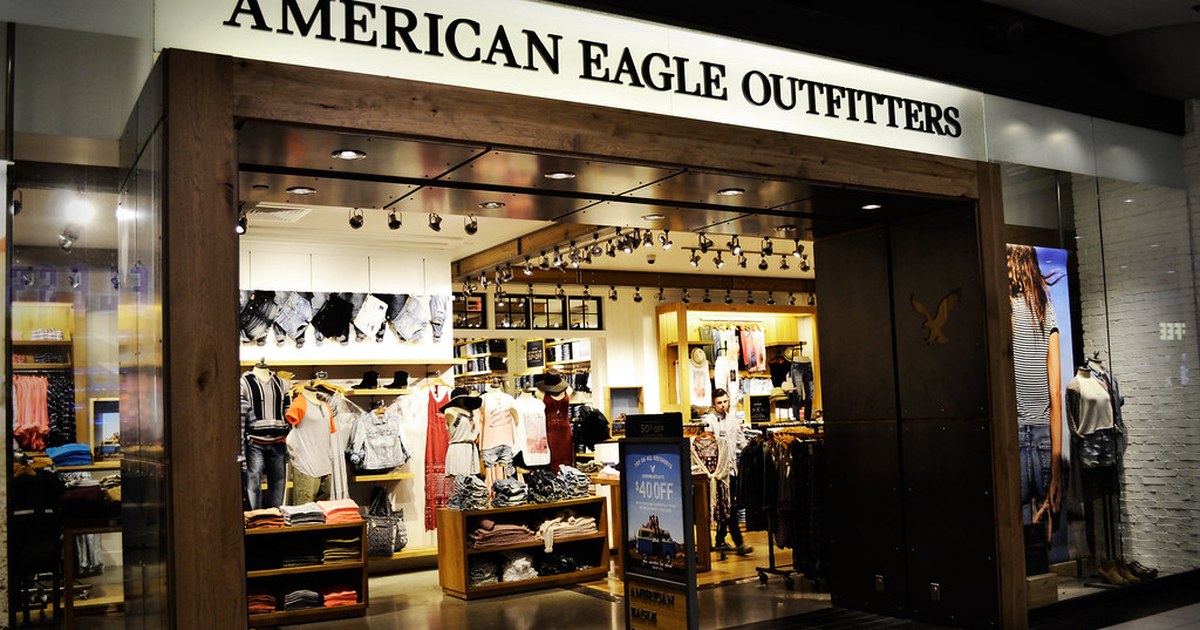
American Eagle Outfitters beat both revenue and EPS estimates by a wide margin on September 9, and the stock fell as much as 15% anyway. The beat itself was real but largely borrowed: $196 million in one-time IEEPA tariff refunds inflated the headline number, and once you strip that out, the core American Eagle brand’s own comparable sales were negative. The market did the stripping-out in real time.
- AEO reported Q2 FY2026 results September 9, 2026: GAAP diluted EPS of $0.79 (vs. $0.21 consensus, a roughly 276% beat) on revenue of $1.38 billion (vs. $1.37 billion consensus).
- The beat was largely a one-time item: the company received $196 million in IEEPA tariff refunds during the quarter, generating a $161 million net operating income benefit that inflated gross margin by 980 basis points, including roughly 1,300 basis points of expansion attributable to the refund alone.
- Underneath the refund, the story was weaker: merchandise margins actually deleveraged 330 basis points, the core American Eagle brand’s comparable sales fell 1%, and inventory rose 14%.
- Aerie remained the growth engine, comparable sales up 19%, but couldn’t offset investor concern about the flagship brand and rising inventory.
- The stock fell roughly 13-15% following the report, exceeding the roughly 13% move options had priced in, the fourth time in AEO’s last nine reports it has moved more than its implied move.
- Examples below are hypothetical and illustrative only, not trade recommendations.
What Actually Happened on September 9
The headline numbers looked like a blowout. GAAP diluted EPS came in at $0.79 against a consensus of $0.21, and revenue reached $1.38 billion against $1.37 billion expected, both comfortably ahead of Wall Street. Net income for the quarter was $134.1 million. On the surface, this is the opposite of what the pre-earnings setup priced: analysts had modeled a 53.3% year-over-year EPS decline on tariff-driven margin compression, and instead EPS rose versus the prior year’s $0.45.
The catch is where that beat came from. AEO disclosed it received $196 million in IEEPA tariff refunds during the quarter, an amount the company itself called “substantially all” of its anticipated refund claims. That refund generated a $161 million net operating income benefit and is the primary reason gross margin expanded 980 basis points year over year, roughly 1,300 basis points of which the company attributes directly to the refund. Refund income like this is real cash, but it is not repeatable operating performance, and traders pricing this stock going forward need to separate the two.
The Number That Mattered More Than the Headline: Merchandise Margin
Strip out the tariff refund and the underlying trend reverses. Merchandise margins, the actual profitability of the goods AEO sells before the one-time refund benefit, deleveraged 330 basis points during the quarter. That is the opposite direction from the headline gross-margin expansion, and it is a much better read on whether the business itself is getting healthier or not.
Inventory also rose 14% year over year, a number that matters because rising inventory ahead of a holiday-adjacent back-half typically means either deliberate stocking for expected demand or a buildup that eventually forces markdowns. Combined with a merchandise-margin decline, the market read this as the latter risk being live, not resolved.
Aerie’s Strength Couldn’t Offset the Core Brand’s Weakness
The Q1 pattern repeated almost exactly. Aerie posted comparable sales growth of 19%, continuing to be the clear growth engine inside the AEO portfolio. The core American Eagle brand, by contrast, posted comparable sales down 1%, extending the divergence flagged in this article’s own pre-earnings setup. Total company comparable sales still rose 6% on Aerie’s strength, but a blended positive number again masked a flagship brand that isn’t growing.
This is now a two-quarter pattern, not a one-off. A trader evaluating AEO going into Q3 is really evaluating two different businesses stapled together: a consistently strong Aerie and a core brand that has posted negative or barely-positive comps in back-to-back quarters.
What the Options Market Priced vs. What Happened
Ahead of the report, options had priced a roughly 13% expected move via the front-week at-the-money straddle. The stock’s actual move exceeded that, falling in the 13% to 15% range depending on the exact window measured (intraday moves in the surrounding sessions were volatile, and the precise final settle varies by source). That puts this report in the same bucket as the pre-earnings setup flagged: AEO has now moved more than its priced expected move in roughly 4 of its last 9 reports, including the 54.3%-versus-10.5%-implied outlier from September 2025.
The lesson repeats: a hypothetical short iron condor sized to the 13% implied range would have been tested or breached on this print, consistent with AEO’s specific history of under-pricing its own volatility. A hypothetical long strangle positioned for a larger-than-implied move would have profited, the structure that has now worked on this name more often than its base rate would predict.
Bottom Line
AEO’s headline EPS and revenue beat was real but substantially manufactured by a one-time $196 million tariff refund, not by improving core operations, and the market correctly priced in the difference by sending the stock down 13-15% despite the “beat.” The number worth tracking into Q3 isn’t the blended comp or the GAAP EPS, it’s whether the core American Eagle brand’s negative comps turn around, since Aerie alone has now carried two straight quarters without that happening.
FAQ
Q: Did American Eagle beat or miss Q2 FY2026 earnings?
A: It beat on both lines: GAAP diluted EPS of $0.79 versus a $0.21 consensus, and revenue of $1.38 billion versus $1.37 billion consensus. The stock still fell 13-15% because the beat was driven substantially by a one-time $196 million tariff refund rather than improving core profitability.
Q: Why did AEO stock fall after beating earnings?
A: The headline beat masked two weaker underlying signals: merchandise margins (excluding the tariff refund) actually deleveraged 330 basis points, and the core American Eagle brand’s comparable sales fell 1% even as Aerie grew 19%. Inventory also rose 14%. The market weighted those signals over the GAAP headline.
Q: What was the tariff refund and how much did it add to earnings?
A: AEO received $196 million in IEEPA tariff refunds during the quarter, generating a $161 million net operating income benefit and accounting for roughly 1,300 basis points of the quarter’s 980-basis-point gross margin expansion (meaning underlying margin performance, excluding the refund, was actually negative).
Q: How did the actual stock move compare to what options priced in?
A: Options had priced a roughly 13% expected move via the front-week at-the-money straddle. The actual move came in at 13-15%, at or slightly beyond that range, extending AEO’s pattern of moving more than its implied move in roughly 4 of its last 9 earnings reports.
Q: Is Aerie or the core American Eagle brand more important to watch going forward?
A: Both, but for different reasons. Aerie (comparable sales +19%) is the demonstrated growth engine. The core American Eagle brand (comparable sales -1%) is now negative for a second consecutive quarter, the more urgent trend to watch since it determines whether AEO is a one-brand growth story or a genuinely diversified one.
Whatever structure a trader considers for a name with this kind of headline-versus-underlying divergence, a platform with clear defined-risk order types and fast execution matters more than usual. tastytrade is built around exactly this kind of multi-leg, defined-risk options trade.
Keep learning: For the mechanics behind why a stock can beat estimates and still fall, see our beat-and-fall earnings pattern guide. For a broader framework on trading straddles, strangles, and IV crush around any earnings report, see how to trade options around earnings.