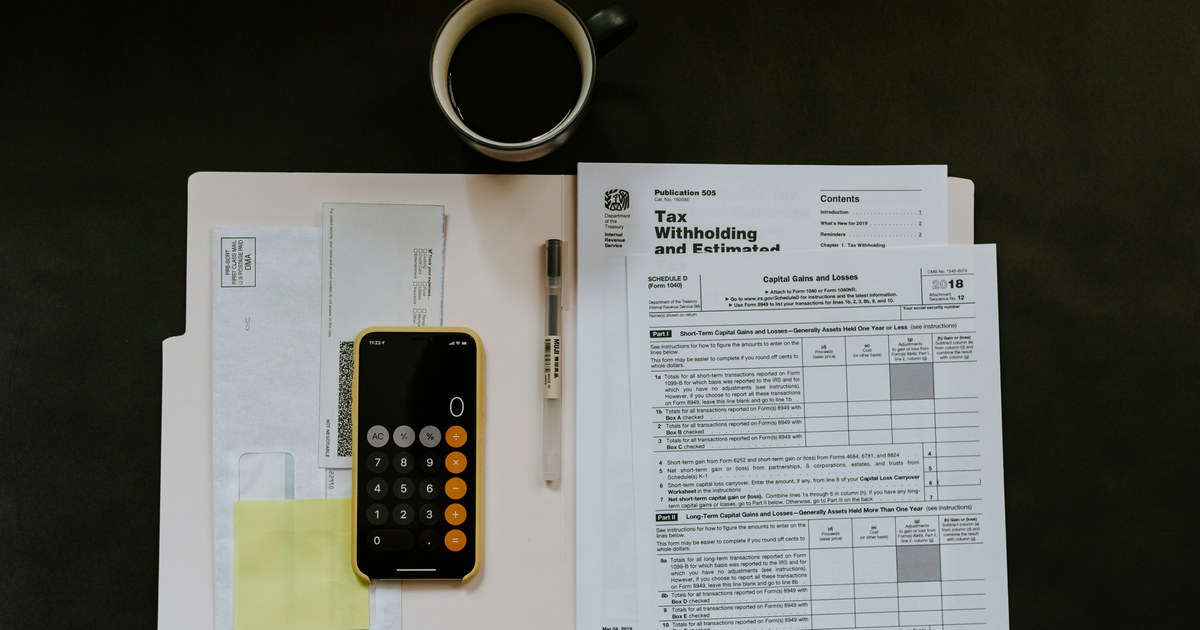
An option that expires worthless is not “nothing happening.” For tax purposes it is a closing event: a long option that expires becomes a capital loss on the expiration date, and a short option that expires becomes a capital gain on that same date. Traders who skip reporting expired options are usually giving up deductions they are entitled to.
Key Takeaways
- A long option that expires worthless is treated as sold for $0 on the expiration date, creating a capital loss equal to what you paid
- A short option that expires worthless creates a capital gain equal to the premium you collected, and that gain is always short-term
- Broad-based index options such as SPX and XSP fall under Section 1256, with 60/40 long-term/short-term treatment reported on Form 6781
- The wash sale rule can disallow a loss on an expired option if you buy a substantially identical position within the 61-day window around it
- Your broker’s 1099-B may not match your own records, and you are responsible for reporting either way
Long Options That Expire Worthless
When you buy a call or a put and it expires out of the money, the IRS treats it as if you sold the option for $0 on the expiration date. Your cost basis is the premium you paid, so the loss equals that premium.
Illustrative example (hypothetical): A trader pays $300 for a call option. It expires worthless. The result is a $300 capital loss on the expiration date, reported on Form 8949 and carried to Schedule D with proceeds of $0 and a cost basis of $300.
The holding period decides whether the loss is short-term or long-term. Most options are held well under a year, so the loss is almost always short-term. A long-dated LEAPS contract held more than one year before it expires produces a long-term loss.
The common mistake here is assuming that because no trade was placed, nothing needs reporting. The loss is real and deductible against other capital gains, plus up to $3,000 of ordinary income per year if your net capital result is a loss. Frequent options buyers who ignore expirations can leave a meaningful amount of deductions unclaimed over several years.
Short Options That Expire Worthless
When you sell an option to open, the premium is not taxed on the day you receive it. The tax event happens when the position closes, expires, or is assigned. If a short option expires worthless, the premium you kept becomes a gain on the expiration date.
Illustrative example (hypothetical): A trader sells a put for $200 in premium and it expires worthless. The result is a $200 capital gain, with $200 of proceeds and a $0 cost basis.
Unlike a long option, a short option’s gain is treated as short-term no matter how long the position was open. The tax code (Section 1234(b)) says closing or lapse of a written option produces short-term capital gain or loss. A short put held for 14 months still produces a short-term gain.
Expired, Exercised, or Assigned: Three Different Outcomes
Expiring worthless is only one way an option position ends. The tax result changes depending on which one applies.
| Outcome | Long option holder | Short option seller |
|---|---|---|
| Expires worthless | Capital loss equal to premium paid, on expiration date | Short-term capital gain equal to premium received, on expiration date |
| Closed before expiration | Gain or loss on the difference between sale proceeds and premium paid | Short-term gain or loss on the difference between premium received and closing cost |
| Exercised (long) / assigned (short) | Premium is folded into the stock’s basis (calls) or reduces the amount realized (puts) | Premium is folded into the stock’s sale proceeds (calls) or reduces the stock’s cost basis (puts) |
That last row matters. If a short put is assigned, you do not report a separate gain on the premium. Instead, the premium reduces the cost basis of the shares you now own, and the tax result waits until you sell those shares. Only the “expires worthless” and “closed” paths create a standalone gain or loss on the option itself.
Index Options and Section 1256
Broad-based index options, such as SPX, XSP, and NDX, are Section 1256 contracts. They follow different rules from equity options and ETF options such as SPY:
- Gains and losses are split 60% long-term and 40% short-term, regardless of how long you held the position
- The position is marked to market at year end, so open contracts are treated as sold at fair market value on December 31
- Results are reported on Form 6781 rather than Form 8949
- The wash sale rule does not apply to Section 1256 contracts
A worthless SPX option therefore produces a loss that is 60% long-term and 40% short-term, even if you held it for a single day. For a deeper comparison of how index and ETF options are taxed differently, see SPX vs. SPY options tax treatment.
The Wash Sale Trap
The wash sale rule disallows a loss if you buy a substantially identical security within 30 days before or after the sale that produced the loss. That is a 61-day window in total. It applies to equity options, and an expiration that creates a loss can be caught by it.
Illustrative example (hypothetical): A trader’s long call expires worthless on a Friday, creating a $400 loss. Two weeks later, the same trader buys a call on the same stock with a similar strike and expiration. Depending on how “substantially identical” is read, some or all of the $400 loss could be disallowed and added to the basis of the new position, deferring the deduction rather than erasing it.
What counts as substantially identical for options is a facts-and-circumstances question, and the IRS has not drawn a bright line for most cases. Different strikes and expirations create gray areas, so a trader who repurchases similar contracts repeatedly should track this carefully. For the full rules, read the options tax treatment guide.
What Your 1099-B Shows (and What It May Not)
Brokers are generally required to report options acquired in recent years as covered securities, which means basis is reported to the IRS. Many brokers include expirations on the 1099-B, but formats vary. Some list expired options with $0 proceeds, others group them differently, and some positions, especially older ones or those transferred between brokers, may be missing details.
Three habits help:
- Compare the 1099-B against your own trade log. Every expiration in your records should appear on your return.
- If the broker omitted an expired option, report it yourself. A missing line on the form does not remove the loss, or the gain.
- Check the dates. A loss or gain belongs to the year the option expired, not the year it was opened, which matters for options that cross a year-end.
Multi-Leg Positions
In a spread, each leg has its own tax result. If you sell a vertical spread and the short leg expires worthless while the long leg is closed for a small loss, you report a gain on one leg and a loss on the other. They net out on Schedule D, but they are separate entries.
Positions that offset each other, such as straddles, can also trigger special straddle loss-deferral rules under Section 1092. If you trade offsetting positions regularly, that is a good reason to get professional advice rather than relying on a general guide.
When to Talk to a Tax Professional
This article is educational and is not tax advice. Consider a CPA who works with traders if:
- Your 1099-B differs from your own records, particularly around exercise or assignment near year end
- You hold both Section 1256 index options and equity options
- You trade offsetting positions that might be subject to straddle rules
- You are considering a trader tax status election (see the mark-to-market election guide)
Bottom Line
An expired option is a taxable event, not a non-event. Long options produce a capital loss and short options produce a short-term gain on the expiration date, while index options follow the 60/40 rules. Keep your own trade log, so your return does not depend on how a 1099-B happens to be formatted.
FAQ
Q: Do I have to report an option that expired worthless?
A: Yes. A long option’s loss and a short option’s gain are both reportable on Form 8949 and Schedule D, even if your broker’s form leaves the expiration out.
Q: Is a worthless option a short-term or long-term loss?
A: It depends on the holding period for long options. Under one year is short-term, over one year is long-term. A short option’s gain or loss is always short-term. Section 1256 index options are 60% long-term and 40% short-term regardless of holding period.
Q: Can the wash sale rule apply to an expired option?
A: It can for equity options. If you buy a substantially identical position within 30 days before or after the loss, the loss may be disallowed and added to the new position’s basis. It does not apply to Section 1256 contracts.
Q: What if my short put is assigned instead of expiring?
A: You do not report a separate gain on the premium. It reduces the cost basis of the shares you receive, and the result is realized when you sell those shares.
Q: Which year does an expired option fall into?
A: The year of the expiration date, not the year you opened the position.
Keep Learning
Continue with how options trades are taxed, compare SPX and SPY tax treatment, or read about what happens when an option is assigned.